What is DBT Therapy?
If you have heard the term DBT but are not quite sure what it means or whether it might help you, you are not alone. Dialectical Behavior Therapy is one of the most researched and effective therapeutic approaches available today, yet many people seeking therapy have never had it explained to them in plain language. This post breaks down exactly what DBT is, how it works, and who benefits most from it.
What Does DBT Actually Mean
DBT stands for Dialectical Behavior Therapy. The word dialectical refers to the balance between two ideas that might seem opposite: acceptance and change. At its core, DBT teaches you to accept yourself and your current situation exactly as they are, while also committing to making meaningful changes that improve your life. This balance is not a contradiction. It is the foundation of how DBT works.
DBT was originally developed in the late 1980s by psychologist Dr. Marsha Linehan, who created it to treat individuals experiencing intense emotional pain and self-destructive behaviors. Since then, research has confirmed its effectiveness for a wide range of mental health challenges, and it has become one of the most widely used evidence-based approaches in modern therapy.
How DBT Is Different From Other Therapies
Many people are familiar with Cognitive Behavioral Therapy, or CBT, which focuses on identifying and changing unhelpful thought patterns. DBT builds on the foundation of CBT but adds something important: a strong emphasis on emotional regulation, distress tolerance, and interpersonal effectiveness.
Where CBT might ask "what are you thinking and how can we change it," DBT also asks "what are you feeling, how intense is it, and what practical skills can help you navigate it without making things worse." This makes DBT particularly useful for people whose emotional experiences feel overwhelming or hard to control.
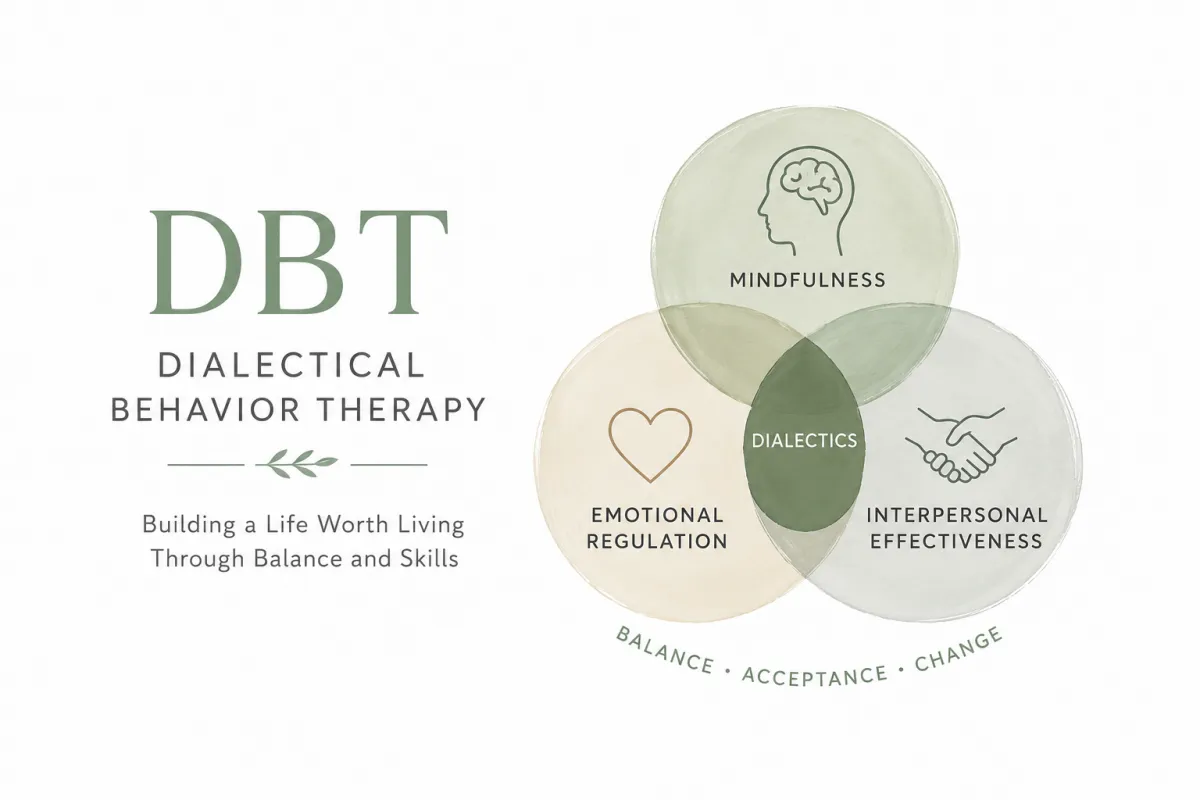
The Four Core Skills of DBT
DBT is organized around four skill areas, each targeting a different aspect of emotional and relational health:
Mindfulness
Mindfulness in DBT is the foundation of everything else. It involves learning to observe your thoughts, feelings, and physical sensations without immediately reacting to them or judging yourself for having them. This skill alone can create significant shifts in how you experience difficult emotions, because it builds the pause between feeling something and acting on it.
Distress Tolerance
Life will always include moments of acute distress. Distress tolerance skills are designed for exactly those moments, giving you concrete tools to get through a crisis without making the situation worse. These skills do not solve the problem, but they help you survive the moment so you can address the problem when you are in a calmer state.
Emotional Regulation
This skill set focuses on understanding your emotions more deeply and developing the ability to manage their intensity. You learn to identify what you are feeling and why, reduce emotional vulnerability over time, and increase positive emotional experiences in your daily life. For people who feel like their emotions are in the driver's seat, emotional regulation skills can be genuinely life-changing.
Interpersonal Effectiveness
Relationships are central to our wellbeing, and yet navigating them is often where people struggle most. Interpersonal effectiveness skills teach you how to communicate your needs clearly, set and maintain boundaries, manage conflict without damaging relationships, and balance your own needs with the needs of others.
Who Benefits Most From DBT
DBT was originally developed for borderline personality disorder, but research and clinical practice have since confirmed its effectiveness for a much broader range of experiences. DBT may be particularly helpful if you:
Experience emotions that feel intense, unpredictable, or hard to manage
Struggle with self-destructive behaviors as a way of coping with distress
Have difficulty maintaining stable relationships
Experience chronic feelings of emptiness or instability
Struggle with anxiety, depression, or PTSD
Have difficulty setting or maintaining boundaries
Feel like your reactions to situations are often disproportionate but cannot seem to stop them
DBT is also increasingly used with adolescents and teenagers who are struggling with emotional dysregulation, self-harm, or interpersonal difficulties. It has been shown to be effective across age groups and cultural backgrounds.
What DBT Looks Like in Practice
DBT can be delivered in different formats depending on your needs and the setting you are working in. In individual therapy, your therapist will work with you to apply DBT skills to the specific challenges and situations you are navigating in your own life. Sessions focus on what is happening for you right now and how DBT tools can be applied in real time.
At Restorative Care Counseling, we integrate DBT skills into our individual therapy sessions as part of a personalized treatment approach. Rather than following a rigid script, we draw on DBT alongside other evidence-based methods, including EMDR, CBT, and Accelerated Resolution Therapy, to build a treatment plan that fits your specific needs and goals.
Is DBT Right for You
If you find yourself struggling with emotional intensity, relationship patterns, impulsive behaviors, or a sense that your feelings run your life rather than the other way around, DBT may be exactly what you are looking for. The skills it teaches are practical, research-backed, and designed to create real change in everyday life.
The best way to find out whether DBT is the right fit for your situation is to have a conversation with a licensed therapist who can help you understand your options.
At Restorative Care Counseling, we offer a free 15-minute consultation where we listen to what you are experiencing and help you determine the best approach for your healing journey. There is no pressure and no commitment required.
Ready to take the next step? Book your free consultation at restorativecarecounseling.com/booking or call us at (786) 849-9976. You do not have to navigate this alone, and the right support can make all the difference.
